

H U T T O N 3 0 0
James Huttonlo scopritore del tempo profondo e del Sistema Terra
Link to ZOOM
https://us06web.zoom.us/j/81909223993?pwd=nODEOBcwDlGw0WpqIcClJLxLT49PE7.1
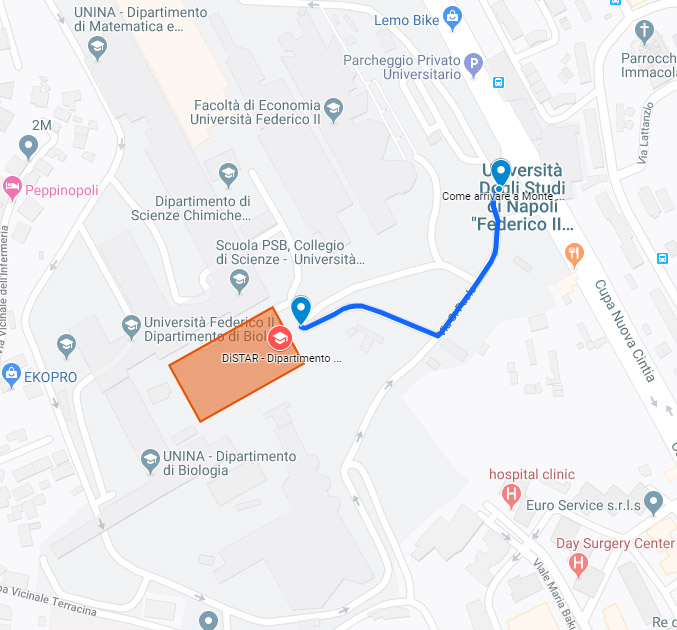
Il Centro Musei delle Scienze Naturali e Fisiche dell'Università degli Studi di Napoli è in via Mezzocannone 8, Napoli
Looking at the Earth System
Una giornata di studi e di divulgazione per celebrare il 3° centenario della nascita di James Hutton, protagonista della grande rivoluzione scientifica che ci ha consegnato la nozione di Tempo Profondo e di Sistema Terra.
La Terra come sistema, ieri e oggi.
Le teorie di James Hutton hanno trasformato il modo di pensare la storia del nostro pianeta. Il convegno ne ripercorre la figura, il contesto illuminista e la ricezione in Italia, fino alle domande contemporanee sulla complessità del sistema Terra e sulla sua didattica.
Programma
Storici della scienza e geologi approfondiscono la figura di James Hutton, il suo tempo e il suo contributo scientifico ed intellettuale.
Introduzione e saluti
 Alessandro Iannace
 Rodolfo Carosi
Ezio Vaccari
Andrea Mazzucchi
Piergiulio Cappelletti
Who was James Hutton?
 Ray Perman
James Hutton was an apprentice lawyer, a qualified doctor, a farmer, a chemical engineer and a canal builder before late in his life he published his revolutionary Theory of the Earth. What led him to challenge the religious and scientific orthodoxy on the age of the earth and the way in which it was formed? Ray Perman, author of James Hutton, Genius of Time, will describe the man and his influences.
James Hutton, Theories of the Earth and World Views
 Martina Kölbl-Ebert
Theories of the Earth were a common literary genre for several centuries. They do not only highlight contemporary geological ideas but also reflect the broader (religious/philosophical) world view of the time and person in question. Whereas such theories in the 18th/early 19th century generally operate with a finite time-frame and a linear trend of geological processes, Hutton’s theory postulated a steady-state Earth that seemed closer to some medieval philosophies than to the general worldview of his time. At the same time, his Theory is rather “modern” in light of our current discussion of the Earth in what is persistently termed the “Anthropocene”.
Hutton through the writings of Neapolitan chemists
 Corinna Guerra
As is well known, Naples and its volcano have been the favorite destination of geologists for centuries, even before geology was established as a scientific discipline. Therefore, it is not surprising that local scholars, and in this talk they will mainly be chemists, took all the opportunities offered by the eruptive events of Mount Vesuvius, past and present, to make their contribution to the diatribe between Neptunists and Plutonists. The aim of the paper is to bring to light particularly lively episodes that occurred in the Neapolitan academies and to see if and how the figure of Hutton emerged.
Coffee break
Siccar Point, James Hutton and the Scottish Age of Enlightenment
 David Harper
The understanding of deep time was based on Hutton’s studies of the geological unconformities at Loch Ranza, Jedburgh and of course Siccar Point. But Hutton was very much part of the Scottish Age of Enlightenment, largely a construct of the Provost of Edinburgh, George Drummond, a group that included David Hume (philosopher), Joseph Black (chemist), Adam Smith (economist and philosopher). Empiricism was key and the enlightenment was modelled on the society of classical Athens. Within this intellectual foment, James Hutton and his friends focused on field observations to frame and test models for the evolution of the Earth and its systems, captured in his “Theory of the Earth”.
Discontinuity in Geology: 300 years after Hutton
Claudia Principe
The reception of Hutton's theory in Early 19th-century Italy
Andrea Candela
The paper examines the reception and interpretation of James Hutton’s geological theories in Italy during the early decades of the 19th century. While European geosciences were initially dominated by the Wernerian Neptunist school, Italy proved to be fertile ground for revisiting and interpreting Huttonian ideas thanks to its unique volcanic landscape. At the center of this intellectual shift was Scipione Breislak, who, in his seminal work Introduction to Geology (1811), served as a crucial intermediary between continental traditions, vulcanism, and a plutonist perspective.
Pausa pranzo
La Terra come Sistema complesso: quale eredità di Hutton nella didattica moderna?
Tavola rotonda rivolta ad insegnanti e studenti delle scuole superiori per approfondire le moderne conoscenze scientifiche relative alla Terra come organismo complesso, al suolo e alla critical zone, alle altre Terre dell’Universo e ai sistemi complessi, temi che rappresentano lo sviluppo delle grandi intuizioni dello scienziato scozzese.
Tavola rotonda guidata dai membri del Comitato Scientifico
La Teoria della Terra di Hutton: una rivoluzione dimenticata?
Alessandro Iannace
L'opera di Hutton è un momento cruciale di una grande rivoluzione scientifica a cavallo dei secoli XVIII e XIX, che cambierà completamente il posto dell'uomo nei confronti della Terra e della sua lunga storia. Perchè non è percepita e insegnata come meriterebbe?
La risorsa suolo nella Zona Critica
Fabio Terribile
Il concetto moderno di Zona Critica (Earth’s Critical Zone - ECZ) costituisce la naturale evoluzione del pensiero di James Hutton, il quale riconobbe per primo nel suolo l'interfaccia viva e dinamica tra alterazione della roccia, flussi idrici e biosfera. Il paradigma dell'ECZ permette di integrare i processi multiscala tra litosfera, suolo, biosfera e atmosfera con la fornitura dei servizi ecosistemici e l'analisi del degrado ambientale, offrendo al tempo stesso approcci avanzati per gestirne la complessità, come i Digital Twins e i sistemi di supporto alle decisioni spaziali (SDSS)
I sistemi complessi nell’insegnamento della Fisica
 Emilio Balzano
I fenomeni fisici che si incontrano in natura sono in generale complessi e nella pratica didattica, per descriverli, si trascurano alcuni effetti e si ricorre a schematizzazioni e ad approssimazioni. Questo processo di modellizzazione è di fondamentale importanza ma non sempre viene reso esplicito. Con alcuni esempi si argomenta sulla possibilità di coinvolgere gli studenti nel processo di modellizzazione.
Hutton e la storia del pensiero
Silvia Caianiello
L'intervento ricostruirà il pensiero di James Hutton – ed in particolare la sua concezione del tempo profondo e dell’interconnessione dinamica tra i processi del sistema della Terra – nel contesto intellettuale della sua epoca
Altre terre nell'Universo
Giovanni Covone